When I was looking for a therapist, I didn't start by booking a call. I started by researching.
I read bios late at night. I clicked through About pages. Most of all, I looked at faces. I was trying to answer a question I couldn't quite put into words: will this person get me? Will I feel safe telling them the hard stuff?
I build websites for therapists, but in that moment I was just a person looking for help. And when I landed on a site full of flawless, glowing, slightly too perfect AI images, I closed the tab. It was an immediate turn-off, and a quiet thought followed me out the door: if the photo isn't real, what else isn't?
That reaction is the whole reason for this article.
Your website is where the relationship starts
Therapy is built on trust, and that trust starts well before the first session. A prospective client is already forming an impression of you while they scroll your homepage. Do you seem warm? Do you seem real? Could they sit across from you, or across a screen from you, every week?
Your therapist website photos are a big part of how they answer those questions. A real photo, even an imperfect one, tells them something true about you. An artificial one, however polished, tells them nothing true at all.
AI images are everywhere now
If AI imagery feels like it is suddenly everywhere, that's because it is:
- An analysis by Everypixel estimated that text-to-image tools had produced more than 15 billion images by 2023, at roughly 34 million a day.
- OpenAI said ChatGPT users generated more than 700 million images in roughly the first week after its image upgrade in March 2025 (TechCrunch).
- Adobe reported that more than 24 billion assets had been generated with its Firefly models by mid-2025 (FutureFive).
- Nearly half of marketers worldwide said they use AI daily, for tasks that include generating images (eMarketer, January 2025).
When something becomes this common, people start to notice it, and they start to get suspicious of it. That glossy, airbrushed, softly lit AI look increasingly reads as generic rather than professional.
I get why it's tempting
I'm not here to shame anyone. There are real reasons therapists reach for AI headshots:
- You're camera-shy. Plenty of people dislike being photographed, therapists included.
- Budget is tight. A professional photographer can cost hundreds of dollars, and a private practice has plenty of other expenses.
- You want to look professional. An AI tool promises a polished result in minutes.
- You're busy. Between sessions, notes and admin, a photo shoot sits at the bottom of the list.
All of that is valid. But it's worth weighing against what your photos are actually for, which is building trust with therapy clients before they ever reach out.
The trust problem: what the research says
The research on AI imagery and trust mostly points one way. Most of what follows comes from industry surveys rather than peer-reviewed science, so treat the exact numbers as signals rather than laws. The pattern is still hard to ignore.
Trust drops as AI involvement rises. A Harris Poll survey in the UK found that about 7 in 10 consumers trust ads made entirely by people. That falls to 4 in 10 when AI tools are involved, and to 2 in 10 when an ad is generated by AI alone.
People want to know what's real. A Getty Images survey across 25 countries found that 90% of consumers want to know whether an image was made with AI, and 76% said they can't always tell.
People are worse at spotting AI than they think, and they care when they find out. In a 2025 survey by Clutch, 66% of consumers felt confident they could spot AI photos, yet 57% got it wrong when tested. Nearly 40% said they would trust a brand less if it used AI images without saying so.
The word "AI" alone can lower trust, especially in health. A Washington State University study published in the Journal of Hospitality Marketing & Management found that describing a product or service as using AI lowered emotional trust and purchase intent. The effect was strongest for higher-risk services, including health services.
Therapy is about as high-stakes and personal as a service gets. Clients are trusting you with their grief, their trauma and their relationships. That is exactly where trust matters most.
Why "but it looks real" isn't the defence you think it is
There is one well-known finding that seems to argue the other way, and it deserves an honest look.
In a 2022 study published in PNAS, researchers Sophie Nightingale and Hany Farid found that AI-generated faces were rated as more trustworthy than real ones, as long as people didn't know which were which. The researchers suggested AI tends to produce "average" faces, which people find reassuring.
So do AI headshots work after all? I'd argue the study shows the opposite.
That trust depends on something the client doesn't know. An AI photo might win the first glance, but the trust it earns is borrowed. The moment a client notices, or joins your first video session and sees someone who looks noticeably different, it collapses. In a profession built on honesty, that doesn't feel like a minor marketing choice. It feels like a small betrayal, right at the start of a relationship that depends on there being none.
An AI photo might win the first glance, but the trust it earns is borrowed.
Put simply, an AI headshot misrepresents the person your client will be sitting across from. They chose a face. They deserve to meet it.
What clients actually connect with
When I look at therapist headshots that make me want to book, they tend to have a few things in common:
- A real expression: a genuine smile, eyes that crinkle a little.
- A real place: your actual office, or somewhere outdoors you love.
- Small imperfections: a stray hair, an uneven smile, a background that isn't perfectly staged.
Those details aren't flaws. They're signals that you are a real person who will show up as yourself.
A photo can't prove you are a good fit, and it isn't meant to. Research on the therapeutic alliance describes what happens inside an ongoing relationship, not what makes someone click contact on a website. But warmth, openness and genuineness are the qualities clients are hoping to find, and a real photo is one of the few honest clues they have before they meet you. (There are real exceptions for therapists with safety or privacy reasons to be careful about showing their face. If that's you, a real photo of your office or your hands around a mug is still better than an invented person.)
The alternative: take a real photo, even with your phone
You don't need a professional photographer to get good, honest therapist headshots. Today's phones are remarkably capable. Here is how to make the most of yours.
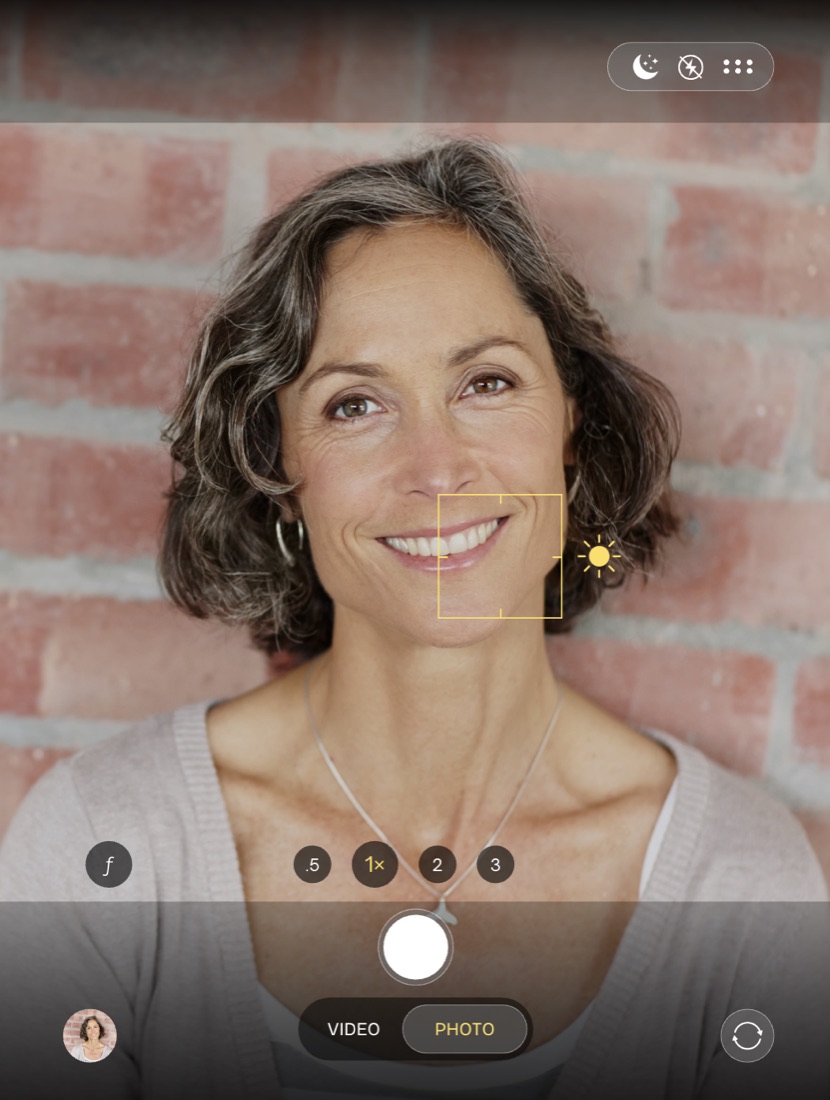
Light is everything
Shoot in soft, natural daylight: near a large window, on an overcast day, or during golden hour, the hour after sunrise or before sunset. Avoid harsh midday sun, which causes squinting and hard shadows, and overhead indoor lighting, which tends to look flat.
Go outside into nature
Trees, gardens, a park bench or a quiet trail make calm, grounded backgrounds that suit a therapy practice. Stand a few metres in front of whatever is behind you so it softly blurs and keeps the focus on you.
Use portrait mode and the back camera
The back camera on your phone has a better lens than the selfie camera. Turn on portrait mode for a soft background blur, and set the phone at eye level or slightly above, which is the most natural and flattering angle.
Skip the arm's-length selfie
Use the self-timer or burst mode, or pick up an inexpensive tripod with a Bluetooth remote. You'll get relaxed, natural framing without an arm in the shot.
Ask a friend, and talk to them
If you can, have a friend take the photos, and chat with them while they shoot. Real conversation produces real expressions, which is exactly what you want.
Relax into it
Face the light, angle your body slightly and let your shoulders drop. For a natural smile, think of someone you care about rather than saying "cheese."
Wear what you'd wear in session
Clients should recognise you when you meet. Solid, muted colours photograph well. Busy patterns and logos tend to distract.
Take lots of shots
Take dozens. Then pick the one where you look most like you, not the one that looks most perfect.
Edit lightly
Adjusting brightness and warmth and cropping are all fine. Skip face-smoothing and beauty filters, since they bring back the same artificial look you're trying to avoid.
Get a variety
Aim for three kinds of images:
- A clear headshot for your homepage and directory profiles.
- A wider environmental shot of you in your office or a favourite outdoor spot.
- A candid, like you with a cup of tea, walking a trail, or laughing mid-conversation.
Together, these give your website a sense of who you are, not just what you look like. If you want to go one step further, a short profile video lets people hear your voice and pace too.
Be yourself. It's your best asset.
Authenticity isn't only good marketing. For therapists, it's an ethical commitment. You ask clients to show up honestly in every session, and your website can model that from the very first click.
The right clients aren't looking for a flawless stock face. They're looking for you: the person whose warmth and presence will help them do hard, important work.
So here is my gentle challenge. Sometime this week, step outside at golden hour, hand your phone to a friend and take a few photos. Pick the one that feels most like you. And if you'd like a second opinion on how your site comes across, a free website audit is a good place to start.